
Pediatric Dentistry
Why See a Pediatric Dentist?
Pediatric dentists (or pedodontists) are qualified to meet the dental needs of infants, toddlers, school-age children, and adolescents. Pediatric dentists are required to undertake an additional two or three years of child-specific training after fulfilling dental school requirements.
In addition to dental training, pediatric dentists specifically study child psychology. This enables them to communicate with children in an effective, gentle, and non-threatening manner.
The American Academy of Pediatric Dentistry (AAPD) recommends that children see a pediatric dentist before the age of one (or approximately six months after the emergence of the first primary tooth). Though this might seem early, biannual preventative dental appointments are imperative for excellent oral health.
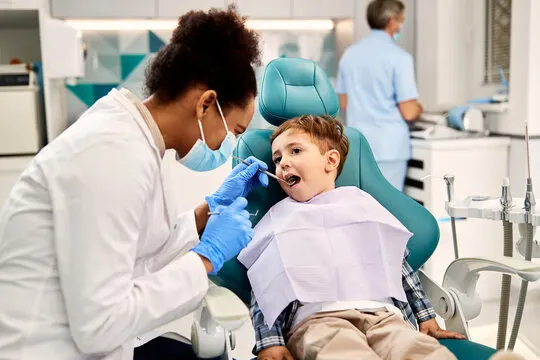
To ask questions about new or ongoing issues.
To discover how to begin a “no tears” oral care program in the home.
To find out how to implement oral injury prevention strategies in the home.
To find out whether the child is at risk for developing caries (cavities).
To receive information about extinguishing unwanted oral habits (e.g., finger-sucking, etc.).
To receive preventative treatments (fluorides and sealants).
To receive reports about how the child’s teeth and jaws are growing and developing.
1. Prevention
Tooth decay is the most prevalent childhood ailment. Fortunately, it is almost completely preventable. Aside from providing advice and guidance relating to home care, the pediatric dentist can apply sealants and fluoride treatments to protect tooth enamel and minimize the risk of cavities.
2. Early detection
Examinations, X-rays, and computer modeling allow the pediatric dentist to predict future oral problems. Examples include malocclusion (bad bite), attrition due to grinding (bruxism), and jaw irregularities. In some cases, optimal outcomes are best achieved by starting treatment early.
3. Treatment
Pediatric dentists offer a wide range of treatments. Aside from preventative treatments (fluoride and sealant applications), the pediatric dentist also performs pulp therapy and treats oral trauma. If primary teeth are lost too soon, space maintainers may be provided to ensure the teeth do not become misaligned.