
Endodontics
Cracked Tooth
Cracked and fractured teeth are common dental problems. As people retain their natural teeth longer (due to advances in dental technology), the likelihood of cracked teeth increases. There are many reasons why teeth may crack, for example, biting on hard objects, trauma, grinding and clenching of teeth. All of these behaviors place the teeth under extra strain and render them more susceptible to cracking.
Cracked and fractured teeth are common dental problems. As people retain their natural teeth longer (due to advances in dental technology), the likelihood of cracked teeth increases. There are many reasons why teeth may crack, for example, biting on hard objects, trauma, grinding and clenching of teeth. All of these behaviors place the teeth under extra strain and render them more susceptible to cracking.
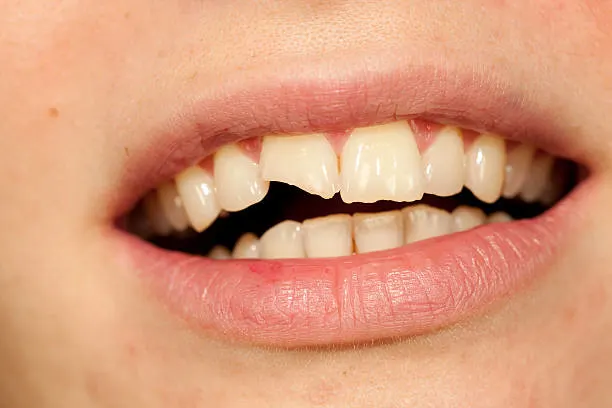
Unexplained pain when eating.
Sensitivity to warm and cold foods.
Pain with no obvious cause.
Difficulty pinpointing the location of the pain.
1. Crazes
These are generally tiny vertical cracks that do not place the teeth in danger. These scratches on the surface of the teeth are considered by most dentists to be a normal part of the tooth anatomy. A craze rarely requires treatment for health reasons, but a wide variety of cosmetic treatments can be performed to reduce the negative aesthetic impact.
3. Oblique subgingival cracks
These cracks extend beyond the gum line and often beyond where the jawbone begins. When a piece breaks off, it will usually remain attached until the dentist removes it. Oblique subgingival cracks are painful and may require a combination of periodontal surgery (to expose the crown) and endodontic treatment to place a crown or other restorative device.
4. Vertical furcation cracks
These cracks occur when the roots of the tooth separate. This type of crack almost always affects the nerve of the tooth. Because the tooth will not generally separate completely, root canal therapy and a crown can usually save the tooth.
6. Vertical apical root cracks
These cracks occur at the apex (tip of the root). Though the tooth does not require extraction from a dental perspective, many patients request an extraction because of the high degree of pain. Root canal therapy alleviates the discomfort for a while, but most often, teeth affected by such cracks are eventually extracted.
How are cracks in the teeth treated?
There are many different types of cracked teeth. Some can only be exposed using X-ray machines, while others are clearly visible to the naked eye. In cases where the tooth root is affected, root canal therapy is the most viable treatment option. The pulp, nerves, and vessels of the tooth will be removed, and the resulting space will be filled with gutta-percha. A crown or filling will be added to stabilize the tooth, and it will continue to function as normal.
When the crack is too severe for the tooth to be saved, the dentist will perform an extraction. There are a number of restorative options in this case, such as bridges, dental implants and partial dentures. All of these structures can restore biting, chewing, and speaking functions.